Overview - React Native
Interactive Live Streaming (ILS) is a low-latency streaming solution designed for real-time engagement at scale. Unlike traditional streaming protocols like HTTP Live Streaming (HLS), which typically have a delay of 15–30 seconds, ILS offers latency as low as 300 milliseconds.
VideoSDK supports 100+ simultaneous hosts/co-hosts (Need more? Contact support@videosdk.live) and 2,000+ real-time viewers (scalable on request).
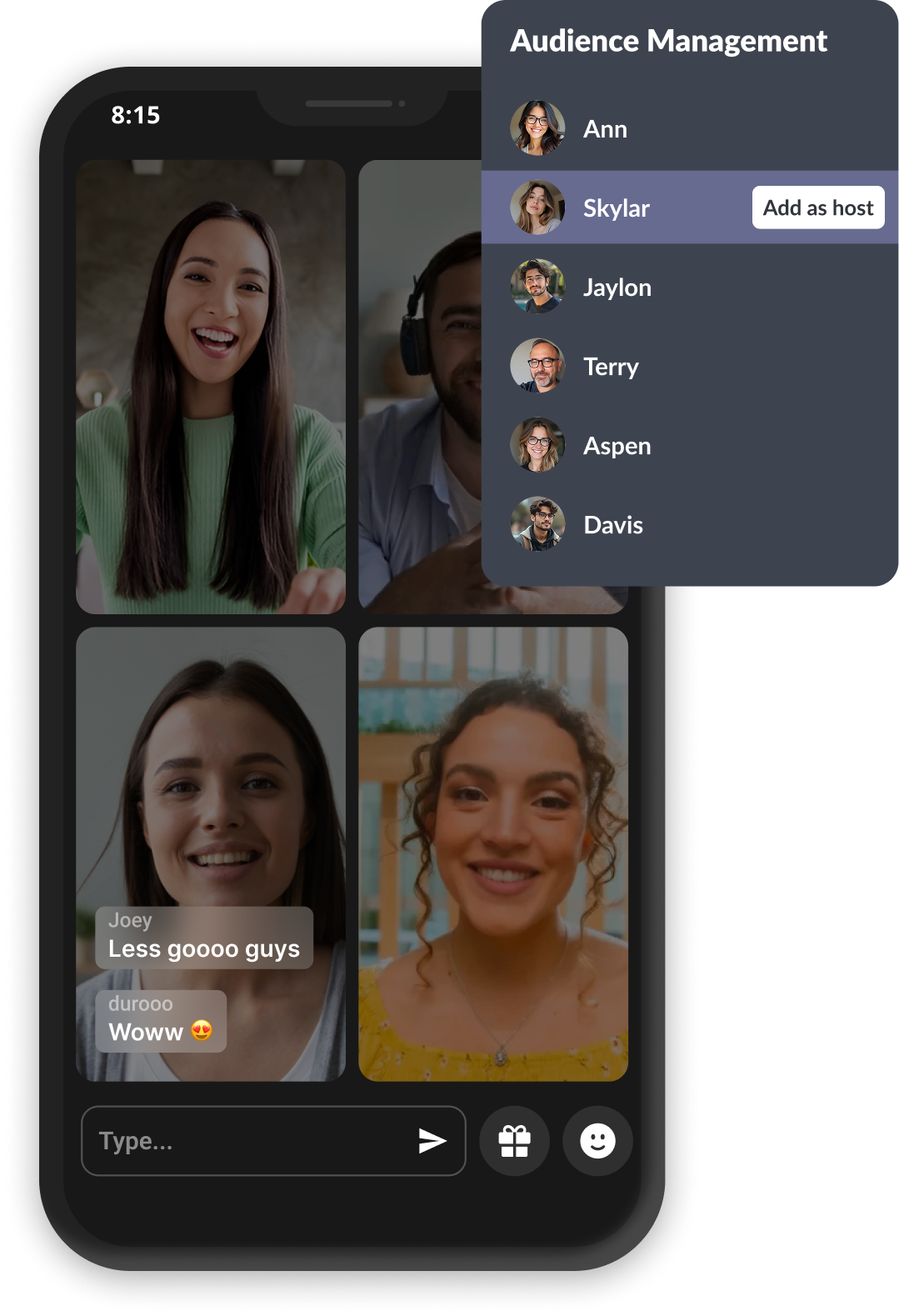
ILS is not just about watching—it's about participating. While hosts and co-hosts can interact via audio/video and screen share, the audience watches in real time and engages through interactive features like chat, polls and virtual gifting.
If you're already using VideoSDK for rooms, throughout this documentation you will learn how to extend its capabilities to support interactive live streaming. Much of the structure stays the same. You will learn how to adapt roles, scale the audience and add interactive features, with the same APIs you already use.
Key Benefits:
-
Ultra-low latency: Sub-second delivery -
Multiple host support: Up to 100 simultaneous broadcasters -
Scalable viewer capacity: Handle up to 2,000 real-time audience members -
Interactive tools: Chat, polls, virtual gifts, hand raise, and more -
Cross-platform compatibility: Works across iOS and Android devices
When to Use ILS?
Use Interactive Live Streaming when you need to:
- Run virtual events with multiple speakers
- Engage your audience actively during webinars
- Host fitness or coaching sessions with feedback
- Stream concerts, shows, or ceremonies with real-time reactions
- Organize town halls, investor calls, or product launches
- Facilitate audio rooms for casual or topic-based discussions
- Power social experiences like live meetups, talent shows, or community hangouts
If your requirement is strictly one-way broadcasting where interactivity is minimal and latency isn't critical (e.g., sports highlights, pre-recorded shows), HTTP Live Streaming (HLS) may be more appropriate. To learn more about HLS, go through the documentation.
Got a Question?  Ask us on discord

